
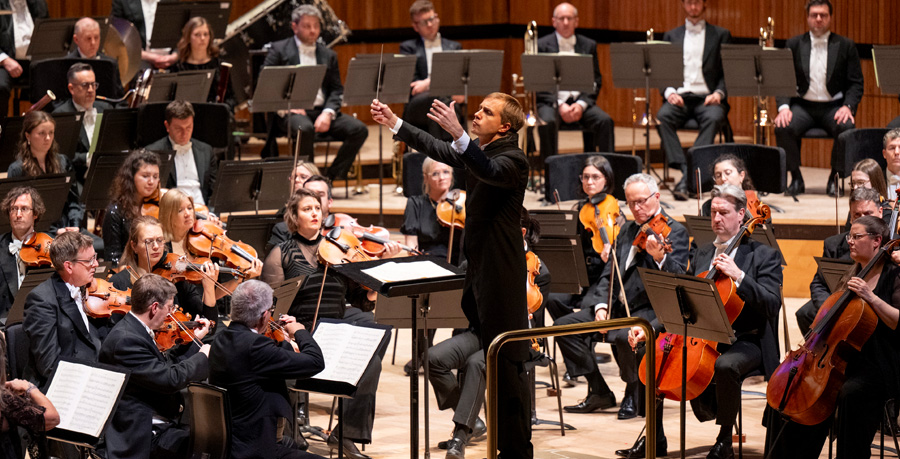
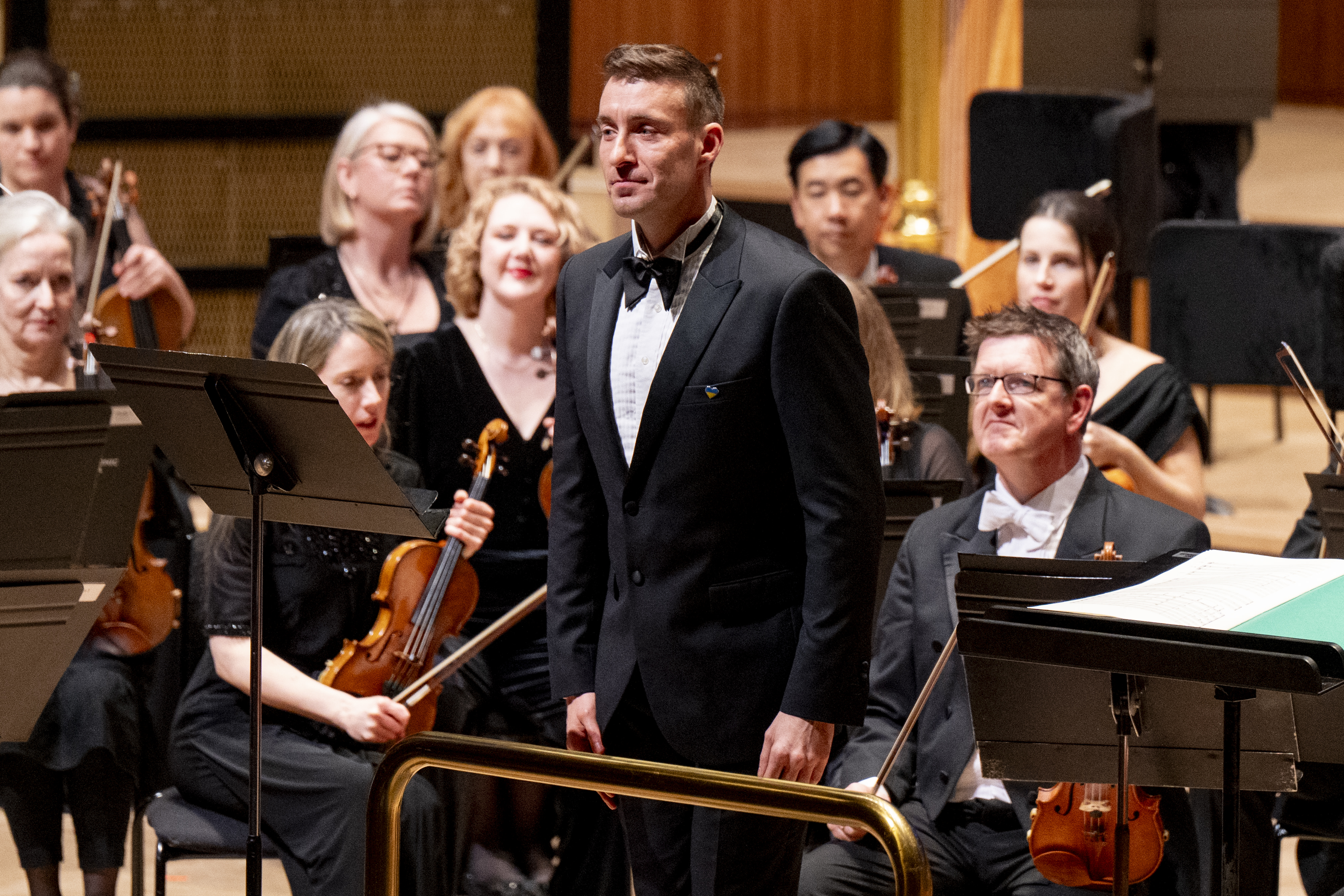
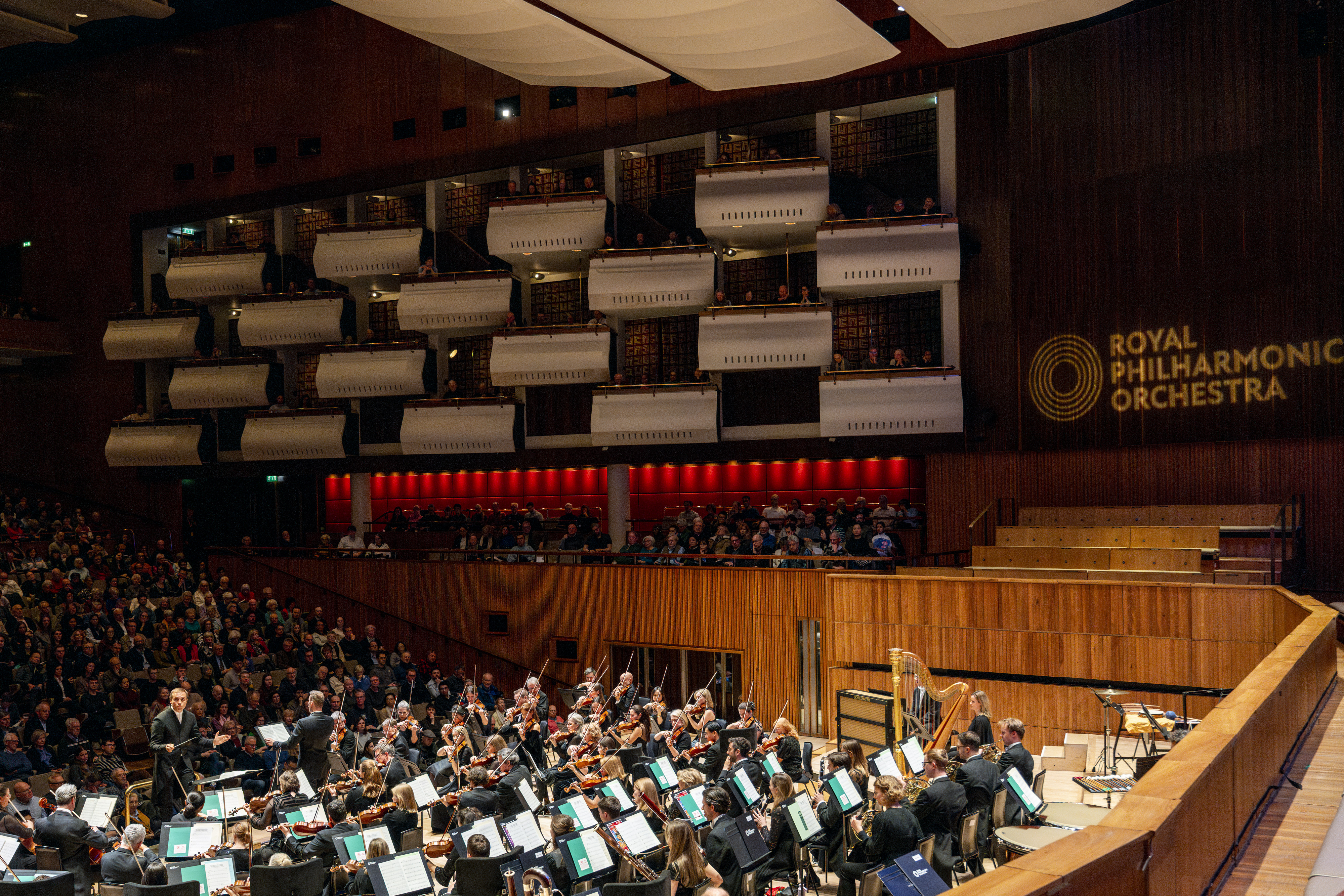
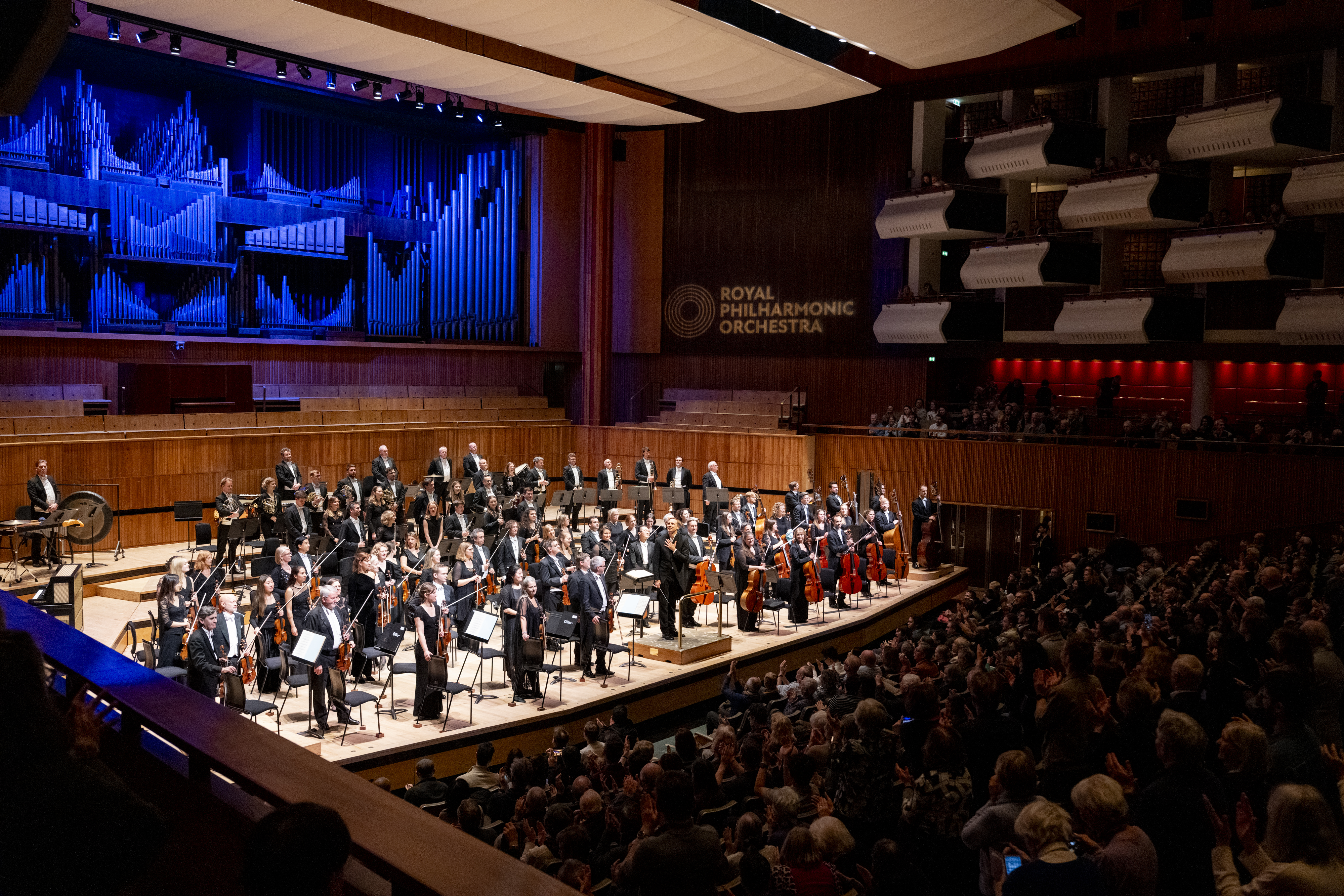
Tuesday 3 February marked a powerful return to London for the Royal Philharmonic Orchestra and our Music Director Vasily Petrenko, as we took to the stage of the Royal Festival Hall for our first concert back in London of 2026 after our tour to the US. Framed by two towering Soviet-era works, the programme traced a compelling journey through resistance, resilience, and revolutionary musical thought.
All photos © Sarah Louise Bennett
The evening opened with Galina Ustvolskaya’s haunting The Dream of Stepan Razin, performed by baritone Yuriy Yurchuk. Based on the story of the legendary 17th-century rebel who revolted against Russia’s ruling elite, the work set an immediate tone of defiance and intensity. Yurchuk’s performance was mesmerising, his rich, dark timbre and expressive command of the Russian text drawing the audience deep into Razin’s tragic tale. As Seen and Heard noted, listeners ‘revelled in his glorious, rich, dark tones and the delivery of the Russian language.’
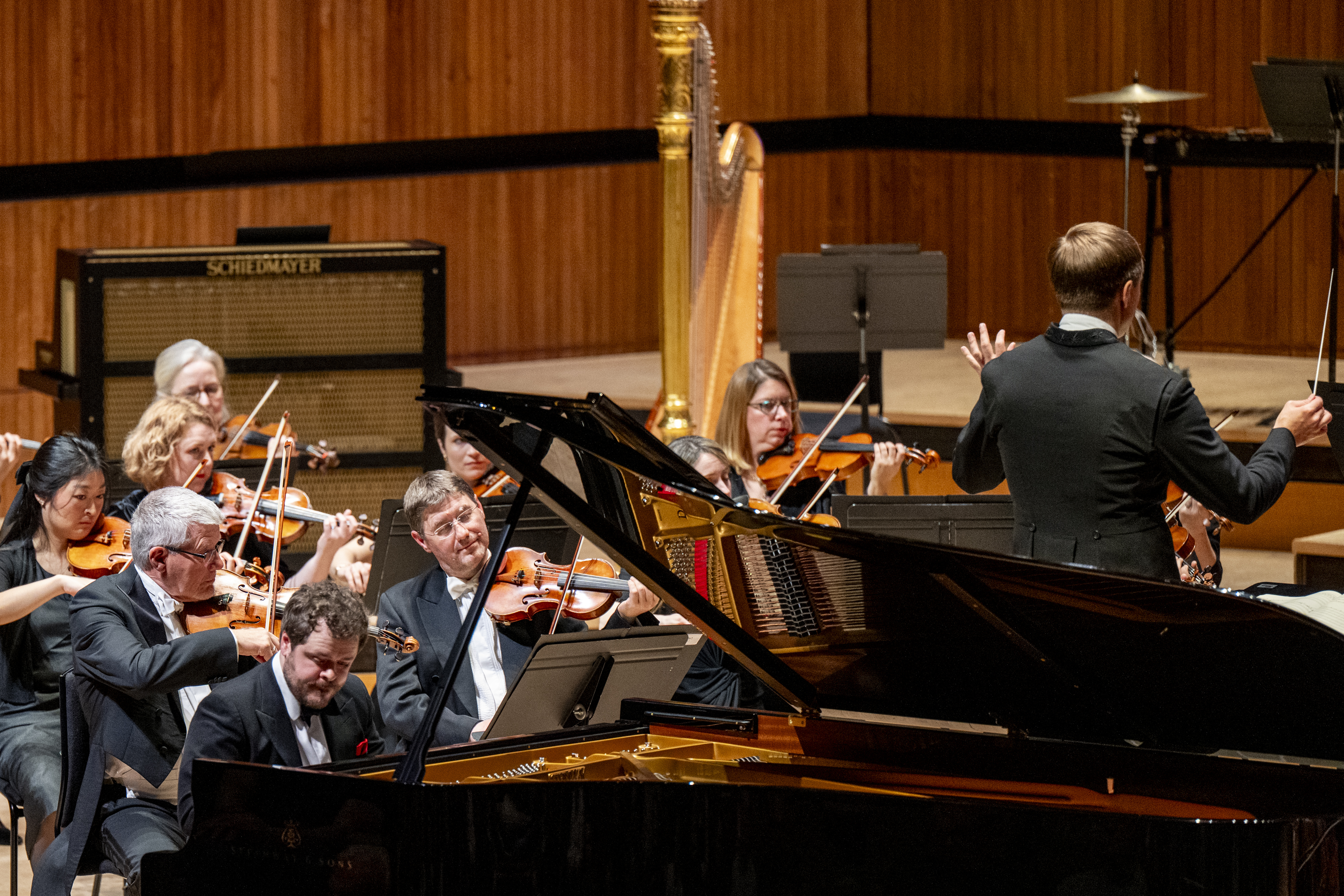
From revolutionary Russia, the programme turned to revolutionary Vienna. Benjamin Grosvenor joined the Orchestra for Beethoven’s Piano Concerto No. 1, a work that already hints at the composer’s bold, rule-breaking spirit. Written early in Beethoven’s career – and famously completed just two days before its premiere – the concerto bursts with daring harmonies and youthful exuberance.
Grosvenor’s performance combined elegance with fire, captivating the hall with his clarity, poise, and expressive range. Bachtrack praised his ‘sprightly articulation combined with contrasting expression,’ while audiences were rewarded with a sparkling encore: Moszkowski’s Étude in A-flat.
After the interval came the emotional and political heart of the programme: Shostakovich’s Symphony No.10. Often interpreted as a searing response to the Stalin era, the symphony reaches its most brutal intensity in the second movement, which the composer himself allegedly described as a musical portrait of the dictator himself. The third movement introduces the DSCH theme, a musical monogram of the composer’s own name, which blasts out in earth-shattering defiance at the fourth-movement finale.
Under Petrenko’s commanding direction, the Orchestra delivered a performance of extraordinary force and precision. The Orchestra surged with raw power and razor-sharp clarity, while woodwind and horn solos shone with character and confidence. Bachtrack hailed ‘power and intensity combined with electric precision,’ and Seen and Heard observed, ‘It is hard to beat a Russian conductor performing Shostakovich.’
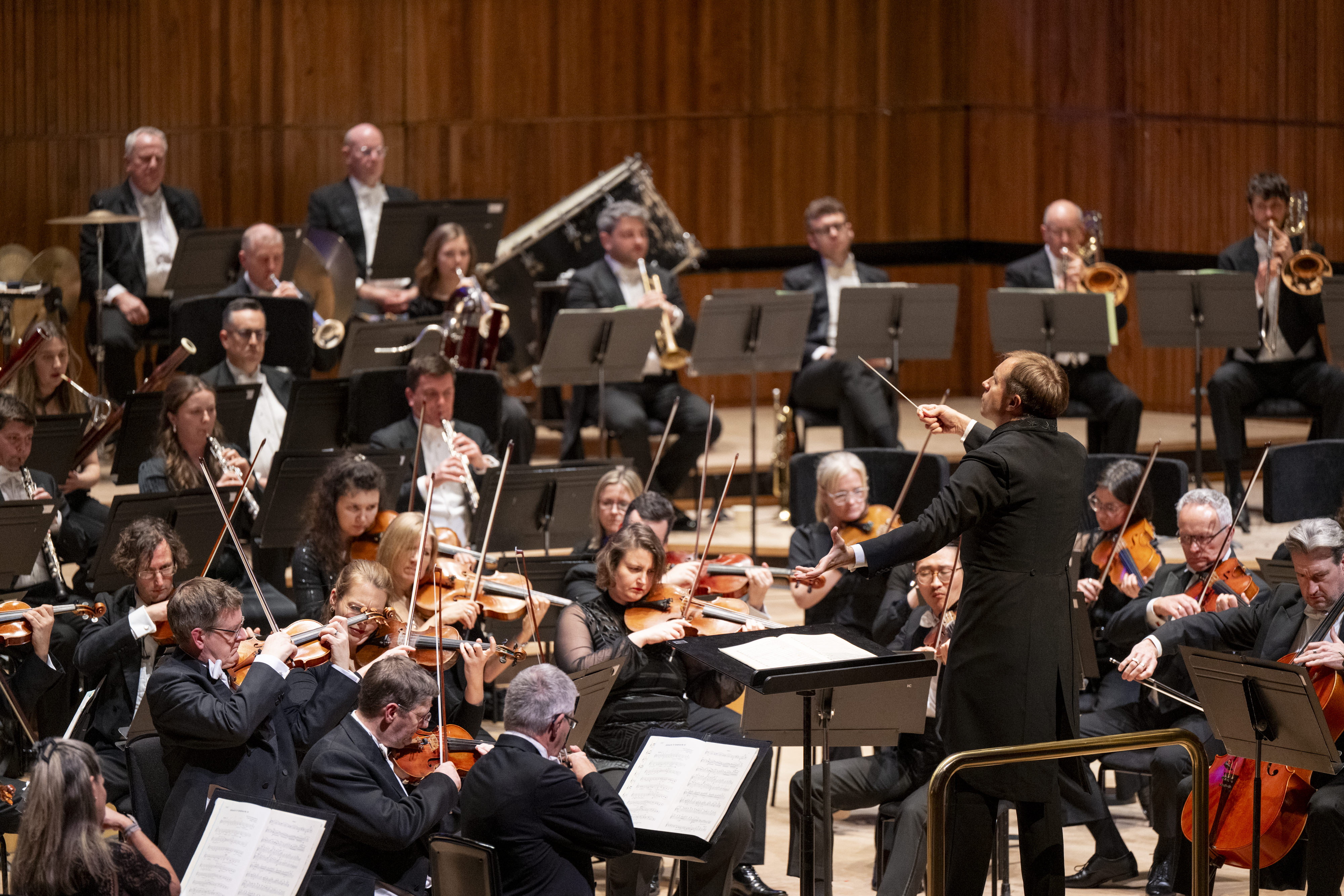
Petrenko proved a master guide through the symphony’s emotional extremes, shaping its anguish, irony, and ultimate defiance with deep insight and authority.
This gripping programme – spanning rebellion, innovation, and survival – offered more than a concert. It was a dramatic exploration of music as resistance, memory, and artistic freedom.
A wonderful concert from start to finish. The most intense performance of Shostakovich 10 (my favourite piece of music in any form) that I've heard - absolutely glorious.
Outstanding playing from the RPO in Shostakovich 10 - truly world class interpretation!...
An incredible performance by Benjamin Grosvenor and the RPO. 👏 I feel so lucky to have been there. An unforgettable evening! 🎹🎶🎺🥁
Loved the whole evening!
Absolutely wonderful concert. The Shostakovich was magnificently intense 👏
I was lucky enough to attend this concert, and it was phenomenal - I was completely mesmerised, first by the exhilarating beauty of the Beethoven and then by the utterly thrilling Shostakovich.
Audience comments on Facebook, Instagram and Bluesky
Royal Philharmonic Orchestra x Vasily Petrenko continues on Wednesday 18 March at the Royal Albert Hall with Mahler 6. We’ll be returning to the Royal Festival Hall on Thursday 23 April for Southbank Centre’s Multitudes festival to perform Messiaen’s Turangalîla, in collaboration with 1927 Studios.