
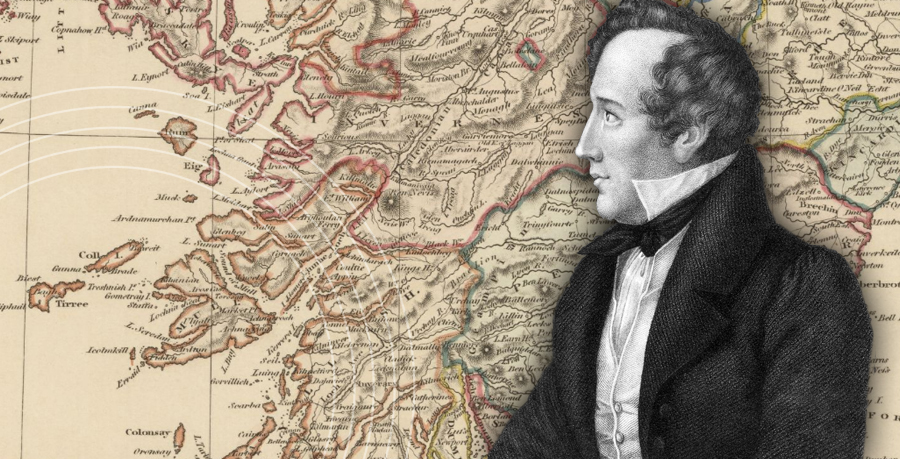
‘It is Sunday when we arrive in Edinburgh; then we cross the meadows, going towards two desperately steep rocks which are called Arthur's Seat, and climb up. Below on the green are walking the most variegated people, women, children and cows; the city stretches far and wide; in the middle is the castle, like a bird's nest on a cliff; beyond the castle come meadows, then hills, then a broad river...’
Felix Mendelssohn in a letter home, 28 July 1829
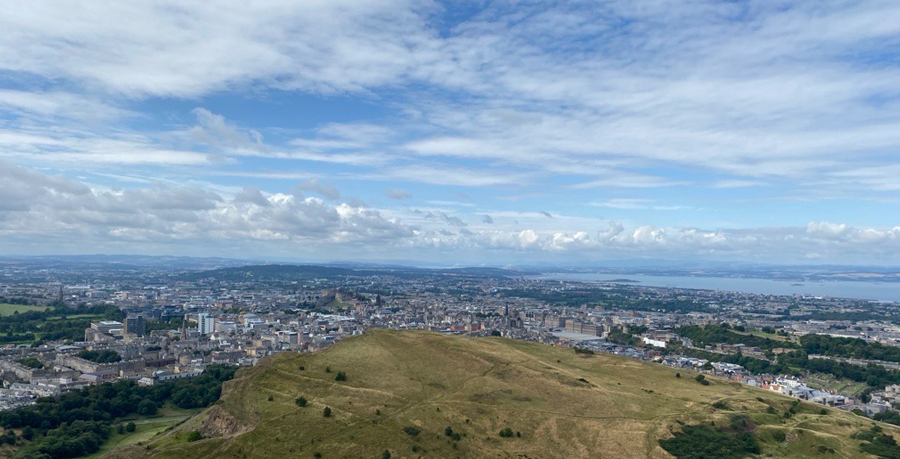 The view from Arthur's Seat, Edinburgh (photo © Louise Williams)
In the summer of 1829, Felix Mendelssohn set off on a three-week tour of Scotland accompanied by his friend Karl Klingemann. Their tour began in Edinburgh and ended in Glasgow with stops along the way at places including Melrose, Perth and Aberfeldy. But it was in the first stop of Edinburgh that the beauty of the Scottish landscape struck Mendelssohn. Mendelssohn was captivated by the vast panorama from Arthur’s Seat, a view he would probably still recognise today (above). Soon after, they visited Holyrood Palace and were mesmerised by its solemn beauty. Mendelssohn experienced a moment of inspiration so vivid that he would later describe it as the birth of a symphony. He wrote home:
‘In the evening twilight we went today to the palace where Queen Mary lived and loved; a little room is shown there with a winding staircase leading up to the door... The chapel close to it is now roofless, grass and ivy grow there, and at that broken altar Mary was crowned Queen of Scotland. Everything round is broken and mouldering and the bright sky shines in. I believe I today found in that old chapel the beginning of my ‘Scottish’ Symphony.’
Felix Mendelssohn in a letter home, 30 July 1829
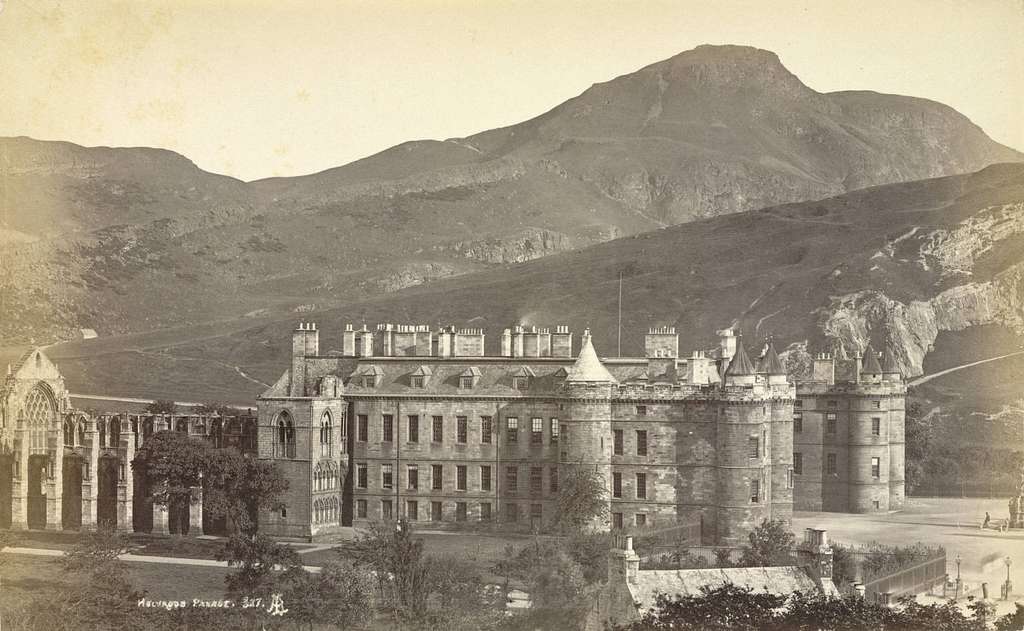 Holyrood Palace, ca.1865-ca.1895 (photo © Cornell University Library)
Within the letter, Mendelssohn also enclosed the opening bars of what would become Symphony No.3. Despite this powerful beginning, the ‘Scottish’ Symphony did not come to life quickly. Mendelssohn carried the memory of Scotland with him for more than a decade before completing the work in 1842 and premiering it in Leipzig, where he conducted the Gewandhausorchester. The symphony, comprising of four movements played without pause, contrasts a dark and stormy opening movement with a light and lively scherzo in the second, with the third and fourth movements evoking the majesty and fragility of the land and seascapes, cities and histories that Mendelssohn encountered on his Scottish travels.
Hear Mendelssohn's 'Scottish' Symphony on Tuesday 25 November at Cadogan Hall.