
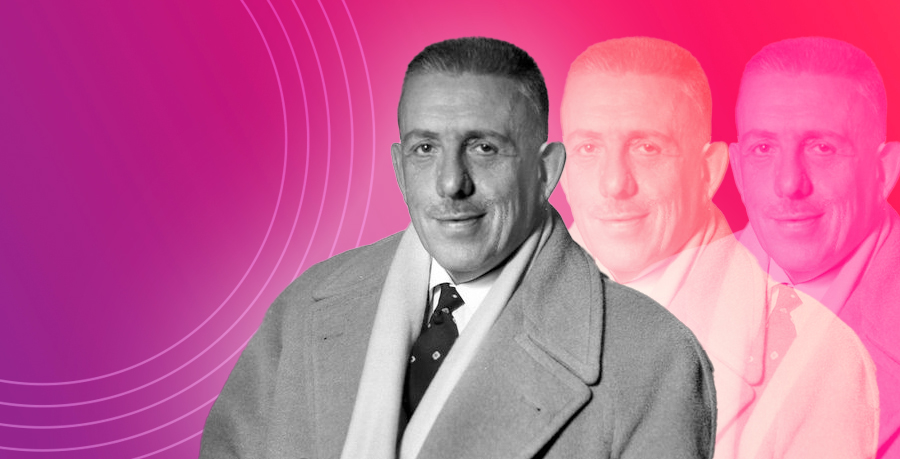
The French composer Francis Poulenc was no stranger to London. Over the course of his life he made intimate connections with orchestras, audiences and critics in the city that warmly received his music throughout the mid-twentieth century and beyond. A composer of ballets, chamber music, piano works, operas and choral music, he had a natural tendency towards the fluid yet fragile quality of the human voice and its infinite capacity for devotion, as demonstrated in the opera Dialogues of the Carmelites and pieces such as La voix humaine and Gloria. A man known for his sense of humour that permeated his music, he was a devout Catholic, and his religious feelings can be felt most keenly in his choral repertoire.
In the years preceding the war, Poulenc established a working relationship with the British Broadcasting Corporation (BBC), which not only broadcast his works on the radio, but also featured his Sonata for Clarinet and Bassoon among the very first television broadcasts in 1932. He first visited the United Kingdom in 1938 with close artistic partner, baritone Pierre Bernac.
Having briefly served in the French army in the summer of 1940, his career as a composer was in a precarious position as a gay man living under the occupation of the Nazis. His cantata Figure humaine, which included a setting of Paul Éluard's poem Liberté, could not be performed in Paris, and so the premiere was performed by the BBC Chorus in a broadcast from London.
In 1945 Poulenc was able to escape the musical confines of wartime Paris when a commission from the French government-in-exile invited him to London. Poulenc performed his Concerto for Two Pianos and Orchestra in a concert at the Royal Albert Hall alongside British composer Benjamin Britten, and he also accompanied Bernac on the piano for selections of French songs at Wigmore Hall and the National Gallery. He would also be present for recordings of his music at the BBC's Maida Vale Studios.
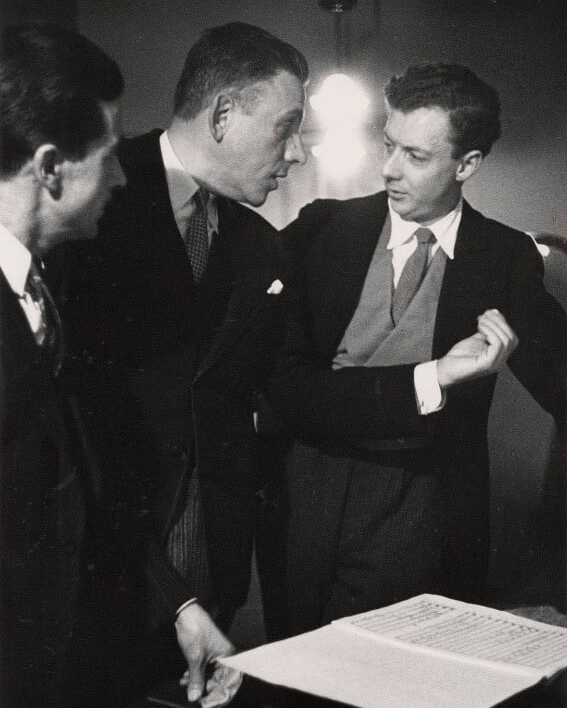 Poulenc and Britten
Poulenc would continue to visit London in the decades that followed the war. Among his friends in London was the legendary twentieth-century music critic Felix Aprahamian, who lived in the suburbs of Muswell Hill in north London. Aprahamian, bearing a rather forthright and distinctive personality, was known for his connections with French and British composers such as Duruflé, Bax, Messiaen, Widor and Walton, and for his knowledge of organ repertoire. Poulenc and many other visitors would give private premieres of their music to Aprahamian at home. In his long life, Aprahamian was a concert director for the London Philharmonic Orchestra, an air raid warden, music critic for The Sunday Times, secretary of the Organ Music Society, and a regular voice on BBC Radio 3.
Another associate of Poulenc's was the musicologist, composer and critic Edward Lockspeiser, who was an authority on French music, specialising in the life and work of Poulenc's countryman, Claude Debussy.
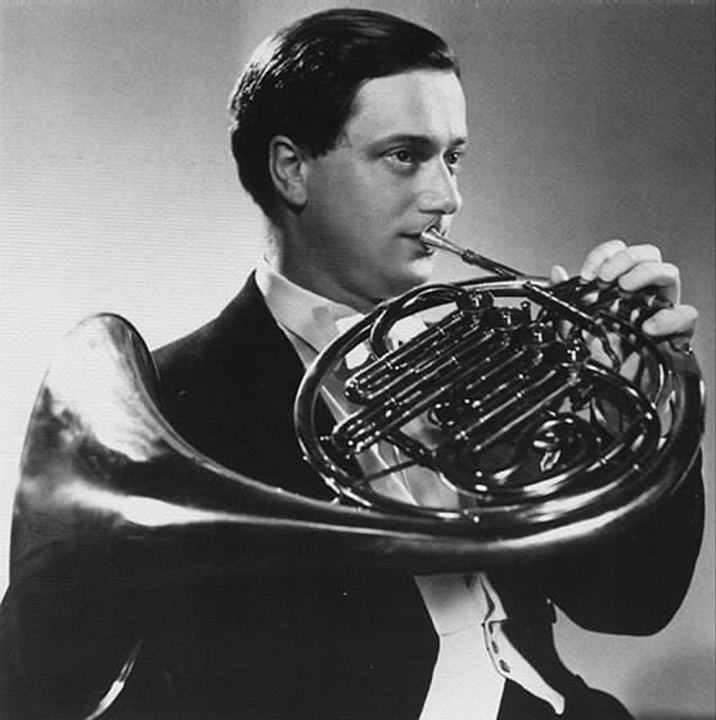
Poulenc's chamber piece, Élégie pour cor et piano, was written in 1957 in memory of the famous British horn player, Dennis Brain, after his death in a car accident. Poulenc, amongst composers such as Britten and Hindemith, had much admired Brain, and he had attended Brain's performance of his Sextet for wind instruments in Wigmore Hall in 1947. Brain was Principal Horn of the Royal Philharmonic Orchestra from its inception under Sir Thomas Beecham in 1946.
Written by Tim Lutton
Sources: Hyperion, Wise Music, Royal Albert Hall, Robert Hugill, and Wikipedia