



What to expect

You may think orchestral concerts are stuffy, boring or formal. At our concerts, we want you to be moved and entertained by passionate and vibrant orchestral music, whether or not you already know about it, and no matter what you’re wearing.

What happens at one of our concerts?
The moment you sit down at one of our concerts, you’re joining us on a journey. It’s a two-way process. We like to think of the audience as our oxygen. It just isn’t the same without you, with us, in the same room.
At the Royal Philharmonic Orchestra (RPO), we don’t arrange music by hierarchies. Great music is great music – we want as many people to experience it, played live by an orchestra, as possible. We play pop music, classical music, show music, film music, video game music and more. We play old music and new music. We approach it all with the same belief in excellence. If something is worth playing, it is worth playing as beautifully and as passionately as possible.
You may already love some of the music we play without even knowing it. If you’ve heard the original UEFA Champions League theme or have noticed music playing during films like The Red Shoes, you’ve already heard us.
Every concert we play is different. Some follow more traditional formats, with music written to be played by an orchestra on a stage. Some performances include music drawn from other genres and cultures, and some may include other media, presenters, film material or singing and dancing.
Whatever music we’re performing, we want our passion for it to come cross in every note. All our performances aim for the same thing – to create a connection with you, joining us in the moment.
On the stage
What is an orchestra?
An orchestra is a group of musicians who play together on different musical instruments. The terms ‘symphony orchestra’ and ‘philharmonic orchestra’ refer to, essentially, the same thing – usually a large group of instruments that are generally not electric or amplified, though the Royal Philharmonic Orchestra does sometimes include electric or amplified instruments.
The word ‘orchestra’ derives from a term used by the ancient Greeks to describe the area at the front of a stage used for dancing and singing. The word evolved to include the musicians themselves – initially small groups, later bigger ones. 'Philharmonic' and 'symphony' also have Greek origins, with 'philharmonic' meaning 'loving harmony', and 'symphony' translates to 'concord of sound'.
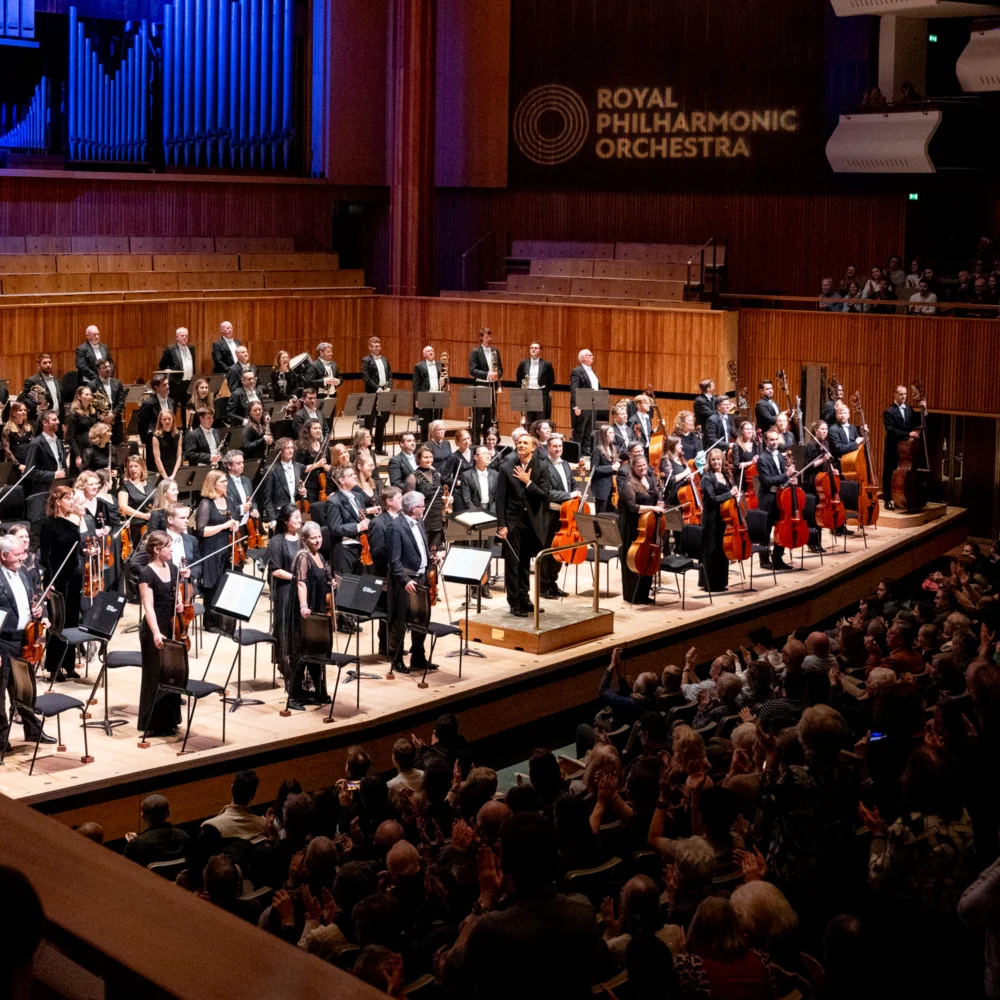
A symphony orchestra like the RPO can consist of anything up to 120 instruments. The majority of those instruments will be stringed instruments – violins, violas, cellos and double basses that make a sound when a haired ‘bow’ is drawn across the string. The rest of the orchestra consists of blown woodwind instruments like flutes and clarinets, blown brass instruments like trumpets and horns and finally percussion instruments – objects that are hit, shaken, stroked or slapped to make a noise. These days, an orchestra can include anything – from car horns and typewriters to vacuum cleaners, self-made instruments and sampled electronics.

Roles in an orchestra
Who's who?
In traditional concerts, there tend to be four elements.
One is the orchestra itself – the group of musicians who mostly play one instrument each.
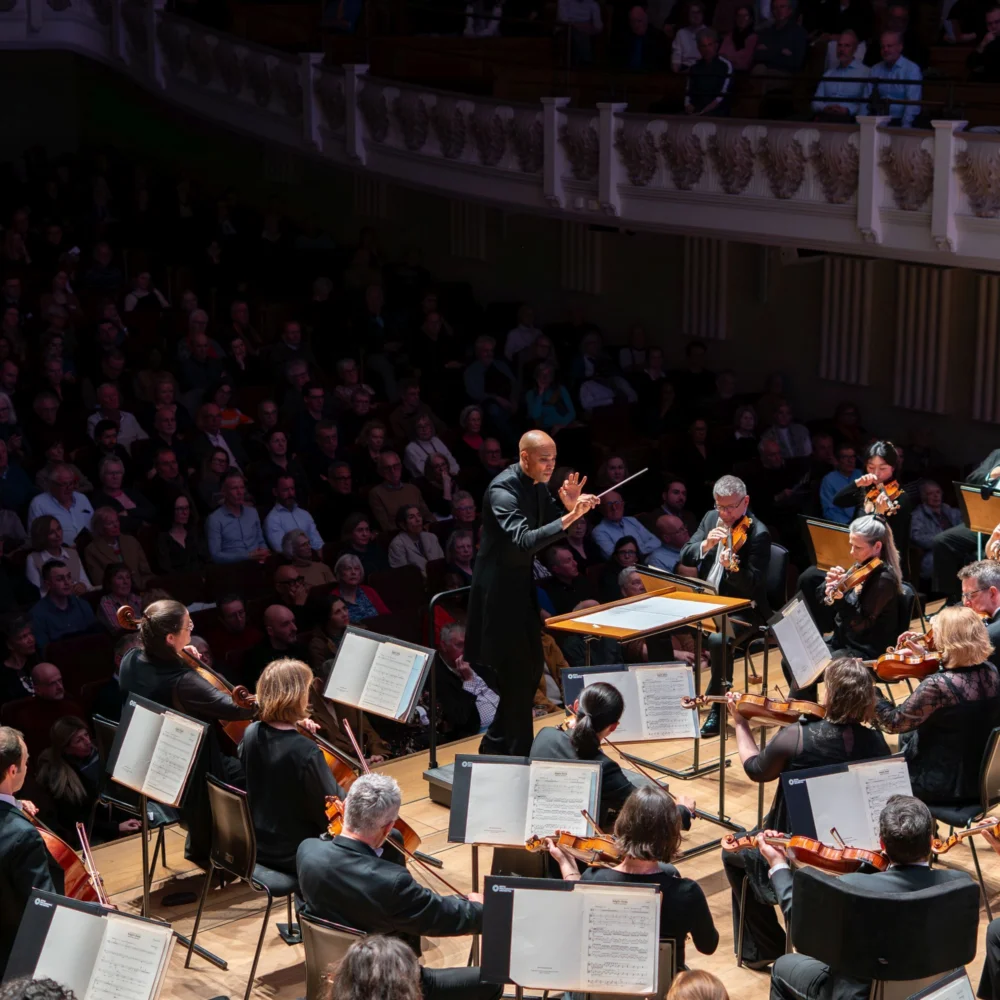
Another is the conductor, who will stand in front, keep the orchestra together, shape the emotional journey of the music and bring out certain details or colours. They might use a short stick called a ‘baton’ to make sure their gestures can be seen even by musicians right at the back.
Also, at the front of the stage, there might be one or more soloists – musicians who will play or sing on their own, though usually while interacting with the orchestra behind.
Finally, there’s the composers – the people who created or wrote the music being played. They might not be at the concert, and they might not even be alive. Sometimes, though, composers who are alive like to conduct their own music.

FAQs
Wear whatever you like and whatever you feel comfortable in. There’s only one dress code, and that’s for the musicians on the stage.
It’s a good idea to arrive at the venue at least fifteen minutes before the concert begins, to make sure you have time to find your seat and can leave items in cloakrooms if you want to. You might want to arrive a little earlier if you’re meeting friends or collecting tickets (there might be a queue at the ticket desk). For orchestral concerts, you’ll need to be in your seat by the time shown on the ticket as there’s generally no warm-up act and, in order not to spoil the experience for other people, latecomers can’t be let in until a suitable break.
In most of our traditional concerts, yes. The music works best when it can be heard without distractions beyond the stage, so it’s best to listen quietly and avoid moving around unnecessarily. The overall volume of an orchestral concert will typically be much quieter than a typical gig performed by a band with mics and amps, so any sound you make will be a lot more obvious to the people around you.
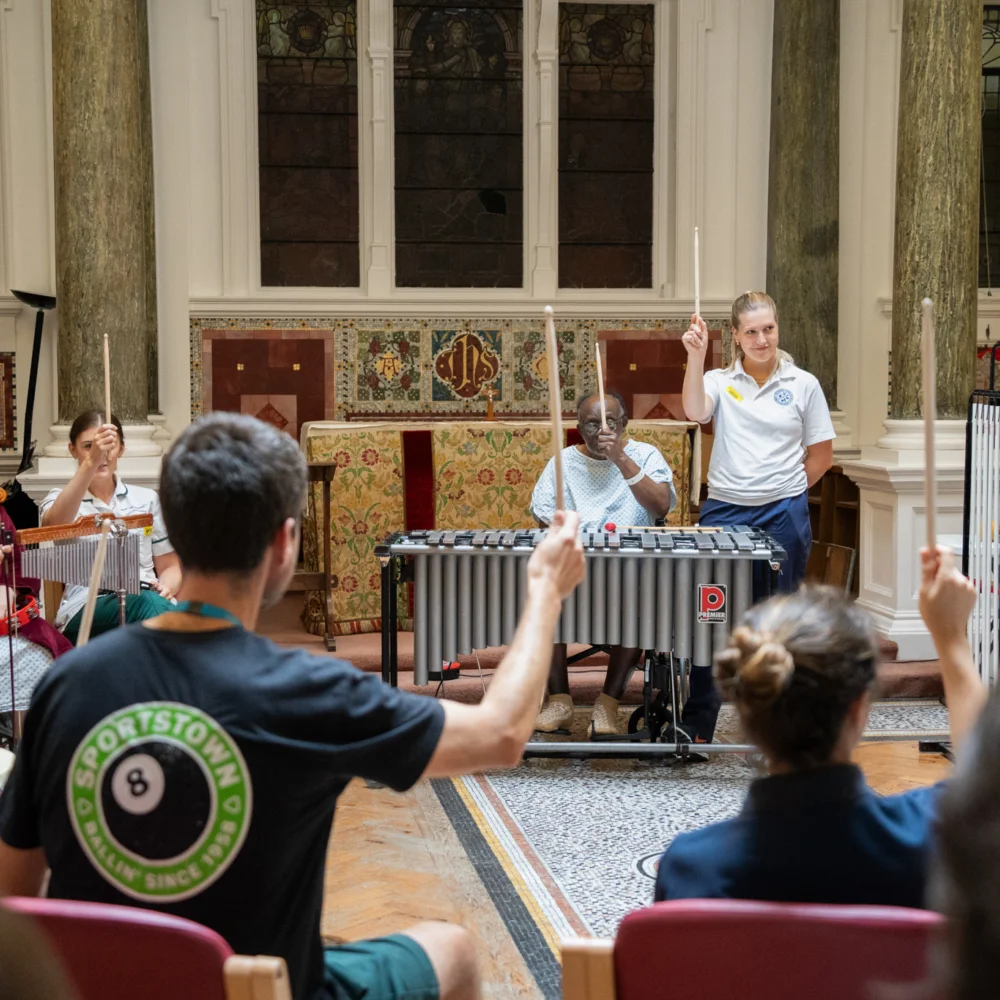
We do, however, present a number of other concert formats that are more informal, whether they are Relaxed Performances or collaborations with pop musicians, in which moving around, dancing and making noise is what it’s all about.
That’s up to you – though in traditional concerts, we ask that you don’t clap while the music is being played, unless you’re asked to. Some people will clap when the orchestra’s Leader (the violinist who sits nearest the conductor) comes on stage and again when the conductor or soloist walks on. If you’ve enjoyed the performance, you might want to clap when a piece is finished. More and more, audiences like to clap between the individual sections or ‘movements’ of a piece. It’s a new trend (actually, it’s a very old trend that’s become new again), but it usually depends on the mood during the concert. A few moments of silence can be exactly what's needed when the music has moved you.
That’s entirely up to you. Some people find it fascinating to watch the conductor, whose gestures can themselves seem like a performance. Some like to focus on a particular instrument or group of instruments. It can be liberating to close your eyes or take off your glasses during a performance and lose yourself in the sound. It can also be interesting to look around at the building we’re all in. For instance, at the Royal Albert Hall, some people like to look up at the mushroom-shaped acoustic panels that hang above the auditorium as the music is being played.
If a performance has gone down particularly well with the audience – maybe a soloist has been particularly amazing or moving – there might be an extra piece played that isn’t listed on the website or in the concert programme, offered as a sort of ‘thank you’ for the applause. It’s known as an ‘encore’. The conductor or soloist might announce what this piece is from the stage.
The vast majority of orchestral music was written to be enjoyed – nothing more. Some people ‘understand’ it in more layered ways because of their work, training or special interest. But the truth is, we all ‘understand’ music differently anyway, even experts and musicologists. Of course, some contextual information on when and why a piece of music was written, and what was happening in the world at the time, can help you comprehend what a composer was trying to say through their music, and that sort of information can often be read in the concert programme. But on the whole, if you’ve been moved by a piece of music, that means you’ve understood it in the most fundamental way possible.
Usually this is not allowed, and you may be stopped from doing so by concert hall staff. This is because music is protected by copyright, meaning it’s often technically illegal to record it without permission. It can also be distracting for other audience members if you film a portion of a concert, as it can obscure their view and intrude on their experience. Besides, it’s always best to enjoy live music for what it is – live, in the moment.
A good time to film and take photographs is during applause and curtain calls, which often better capture the atmosphere of the show anyway. Then you can post your photos on social media and add a comment about what the performance meant to you.