




1940s
Peace in Europe
- In 1946, Britain’s first full year of peace following the Second World War, the entrepreneur and conductor Sir Thomas Beecham sets out to establish ‘a new great orchestra’ for Britain
- On 15 September 1946, Beecham’s Royal Philharmonic Orchestra gives its first performance, at the Davis Theatre in Croydon
- By 1949, the RPO has been recognised for setting new orchestral standards in London and has made over 200 recordings for major record labels including His Master’s Voice, CBS and RCA Victor

1950s
A World Opening Up
- In 1950, the RPO becomes the first British orchestra to tour to the USA since 1912, with Beecham conducting 52 concerts in 45 cities over 64 days
- Beecham prides himself on recruiting the best musicians in London and by the mid 1950s, the RPO’s wind section is regarded as the best ever assembled in Britain – attracting the nickname ‘The Royal Family’
- The Orchestra consolidates its long association with film music in 1955, recording the score to Laurence Olivier’s landmark film of Shakespeare’s Richard III
- In 1957, a European tour takes the RPO around the continent starting at the Salle Pleyel in Paris and ending in at the Musikverein in Vienna

1960s
New Waves
- Following Beecham’s death, the great German conductor Rudolf Kempe takes the RPO’s musical reigns as Principal Conductor in 1961
- Igor Stravinsky leads the Orchestra into the studio in 1964 to record his own opera The Rake’s Progress for Colombia Masterworks
- Following its separation from the Royal Philharmonic Society, whose concert series it had originally played for, Queen Elizabeth II unconditionally confers the title ‘Royal’ on the Orchestra in 1966
- A pioneering series of mixed genre concerts throughout the 1960s include an appearance with The Nice – one of the first collaborations between a symphony orchestra and a rock band

1970s
Great Maestros
- On 15 September 1971, the RPO celebrates its 25th birthday – back in Croydon, but this time with a concert at Fairfield Halls under Sir Adrian Boult
- In 1975, the Hungarian Antal Doráti replaces Kempe as the RPO’s Chief Conductor
- Yuri Temirkanov is appointed as our Principal Guest Conductor. This rich artistic partnership began in the recording studio in 1977, when EMI commissioned Maestro Temirkanov and the RPO to record Rachmaninov’s Symphony No.2, which immediately led to the Orchestra giving him a title.

1980s
Entrepreneurship Rules
- Reduced culture funding in the 1980s leads the RPO to return to the entrepreneurial spirit of its founder, exploring new revenue streams and beginning to work with commercial sponsors
- In 1981, the iconic RPO album Hooked on Classics is released, charting in 12 countries and reaching No.2 in the UK singles chart
- In 1986, the RPO becomes the first orchestra in the world to release recordings under its own record label, including the first Symphonic Rock album
- The Royal Philharmonic Concert Orchestra is established in 1987 – a versatile, adaptable sister orchestra with a flair for popular music
- In 1987 André Previn and Vladimir Ashkenazy form the unique partnership of Principal Conductor and Musical Director (respectively) to the RPO.
- 1989 sees the release of the album Soy Gitang, in which the RPO collaborates with the great flamenco singer Camarón de la Isla

1990s
Towards The Millenium
- Recognising a rapidly changing world, in 1993 the RPO establishes one of the first education and outreach programmes of its kind, today known as RPO Resound
- At Angel Studios in 1992, the Orchestra makes the original recording of the much-loved UEFA Champions League anthem
- The RPO travels to Rome in 1994, for the Papal Concert at St Peter’s Basilica attended by Pope John Paul II
- EMI launches its Great Recordings of the Century series in 1998, reissuing numerous RPO recordings including definitive recordings of music by Grieg, Delius, Tchaikovsky and Schubert, many conducted by Beecham

2000s
New Platforms
- In 2003, the RPO’s Music Director Daniele Gatti begins a journey through Beethoven’s nine symphonies live in concert that draw superlative reviews in which it is hailed as the start of a new era for the Orchestra
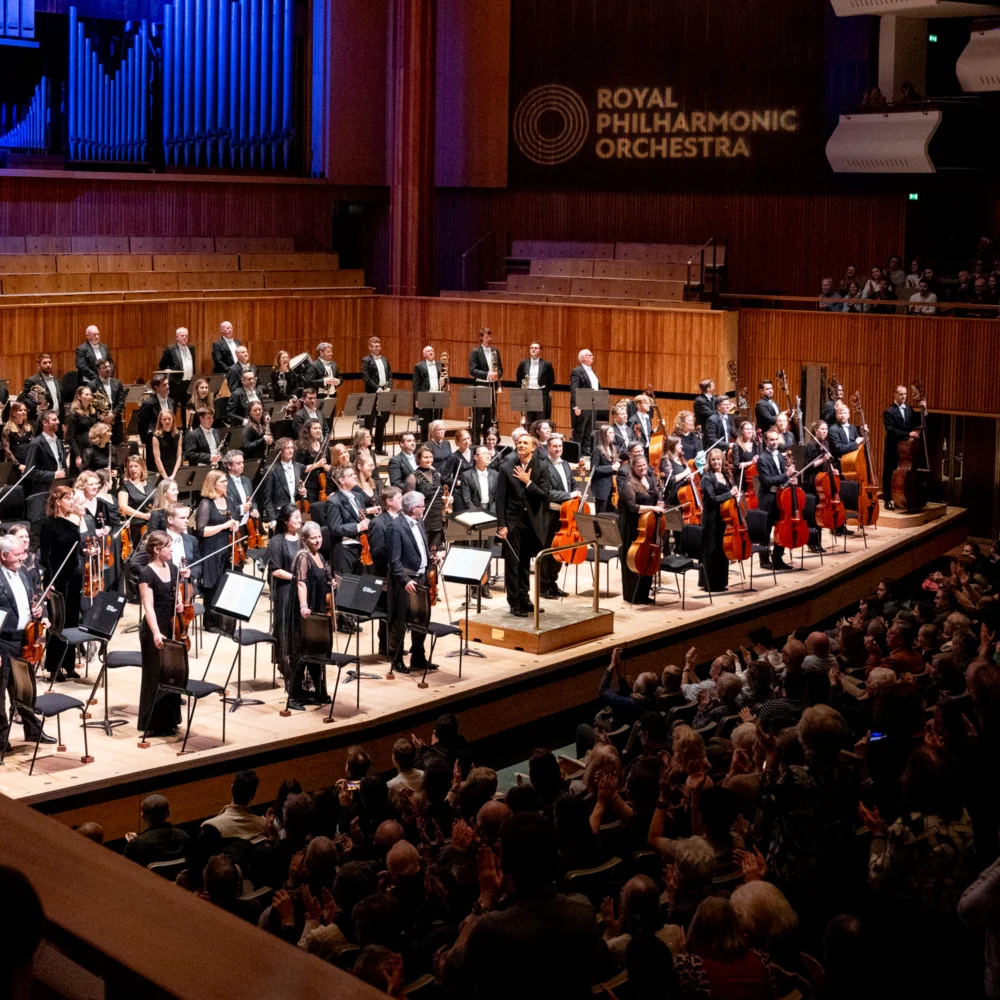
- The RPO becomes the sole Resident Orchestra at the newly opened Cadogan Hall in London in 2004, while continuing to play regularly at the Royal Albert Hall and the Southbank Centre’s Royal Festival Hall – the RPO remains the only symphony orchestra in London to play regularly at three concert halls
- With the launch of the streaming service Spotify in 2006, thousands of RPO recordings dating back to Beecham’s era become instantly available to listen to anywhere in the world

2010s
Extending Reach
- In May 2013, six youth ensembles from across London boroughs join the RPO at the Royal Albert Hall to perform a piece co-composed by all six groups
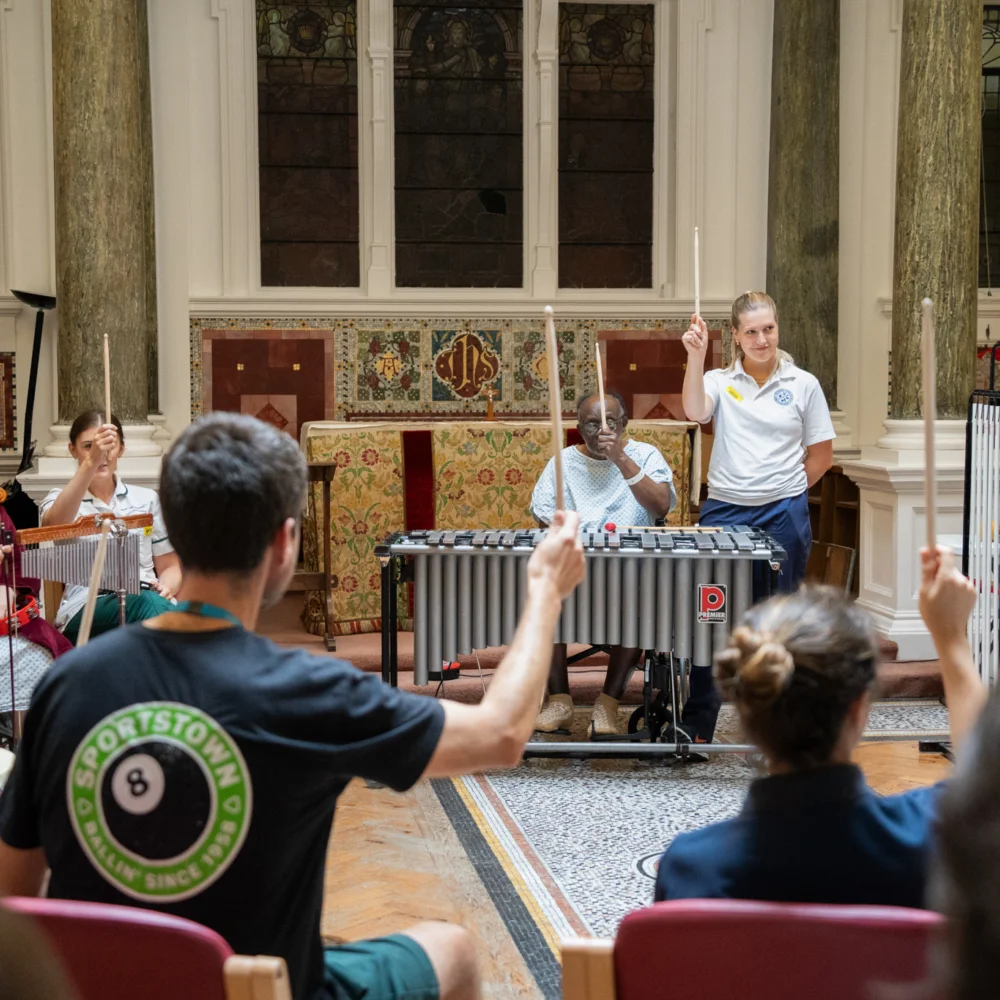
- The RPO’s pioneering music therapy programme for stroke survivors and their carers, STROKESTRA®, is launched in 2015 and has since transformed outcomes for dozens of patients
- In 2017 the RPO worked with children across Hull, and performed a concert of John Williams’ music at Hull City Hall as part of the City of Culture celebrations

2020s
The New World
- Charismatic British-Russian conductor Vasily Petrenko begins his tenure as the RPO’s new Music Director in 2021
- The RPO becomes the first British orchestra to tour to the USA since the COVID-19 pandemic in 2022, continuing a relationship with the nation stretching back to 1950
- Musicians from the RPO perform during the Coronation of King Charles III, the Orchestra’s Patron, at Westminster Abbey in 2023
- As digital media continues to transform the landscape of music, statistics from 2025 show that the RPO’s digital audience stands at over 70 million people a year
- In 2025, the RPO realises a long-held ambition to embed itself in the everyday life of a diverse community and moves its headquarters to Wembley Park in the London Borough of Brent
- In 2025, the RPO signs with a record label for the first time in over five decades, agreeing to a multi-album deal with French label Harmonia Mundi
