
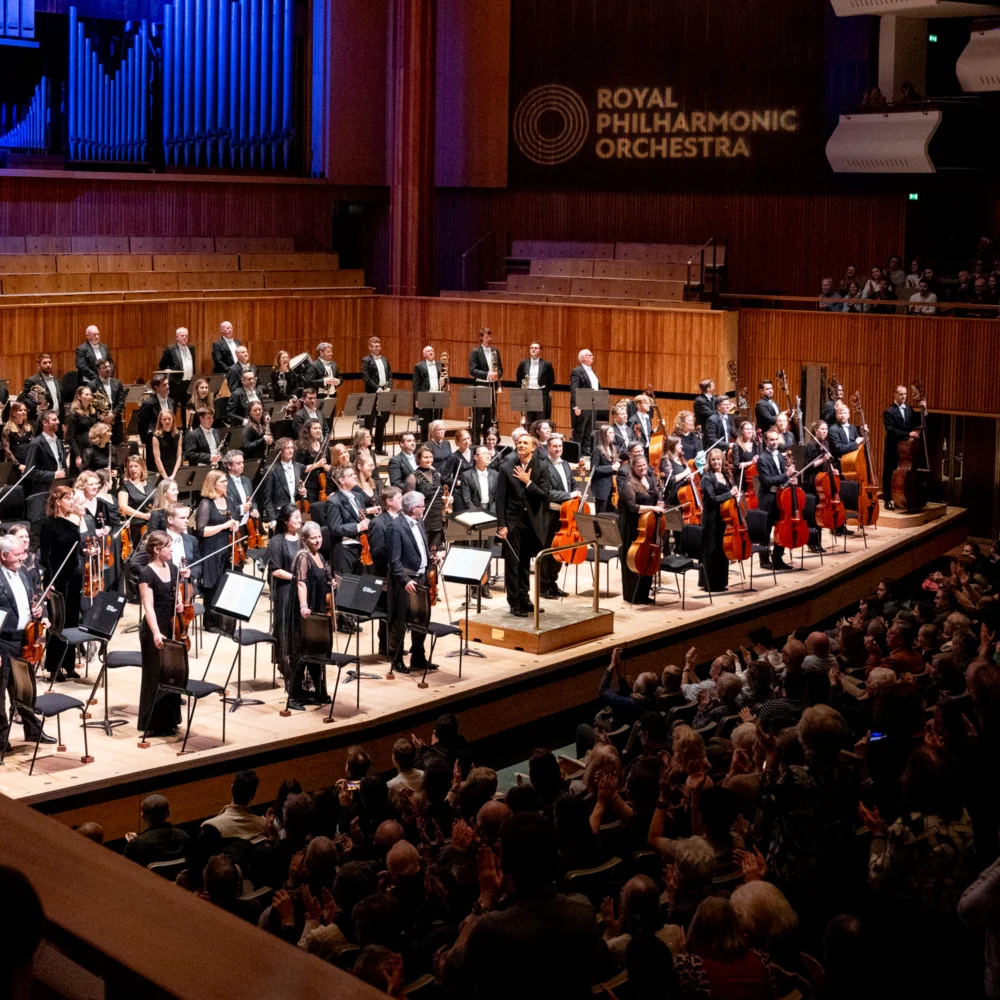

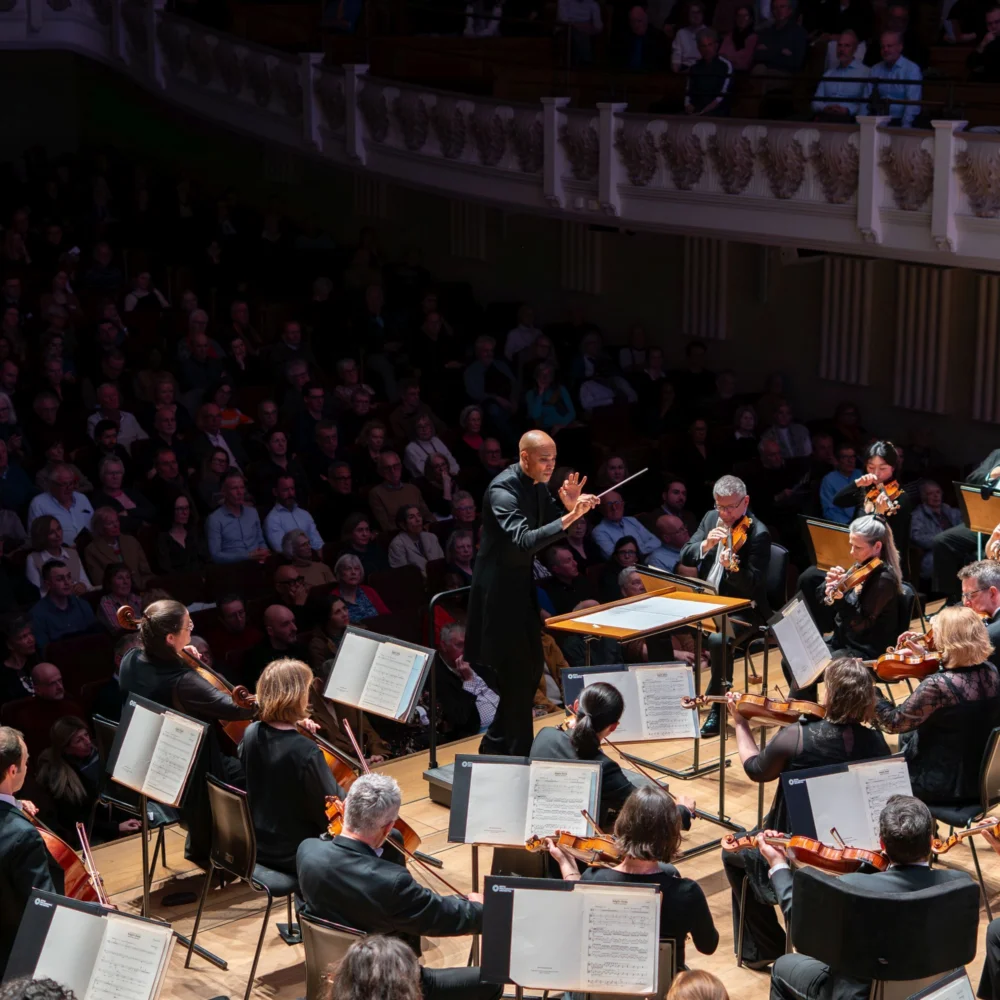


Photos and reactions: Ray Chen and Mahler 5 at the Royal Albert Hall

Credit: Frances Marshall
On Tuesday 12 May we concluded this season's series of Mahler symphonies at the Royal Albert Hall, conducted by Vasily Petrenko, with the almighty Fifth. In the first half, superstar violinist Ray Chen performed Korngold's swashbuckling Violin Concerto in all its colour and glamour.
Read on to see more photos, reviews and reactions from the evening.


Like Mahler, Korngold was a child prodigy who went on to make his name in the opera house. His international success as a composer and conductor after Die tote Stadt came under the shadow of the Nazi's rise to power in 1933, and, being from a Jewish family, he took the opportunity to move to Hollywood when he accepted a commission in 1934 to work on the score of renowned director Max Rheinhardt's A Midsummer Night's Dream.
Although he continued to conduct operas in Austria, another commission in 1938 to compose the score for The Adventures for Robin Hood presented him with another opportunity to escape just as the country was annexed and his home in Vienna seized. Korngold's Violin Concerto, premiered in 1947 by the legendary Jascha Heifetz, incorporates many themes and musical ideas from the many film scores he'd composed during his time in the US, such as Another Dawn and Anthony Adverse, and his other post-war concert works also contains his signature blend of the worlds of film and classical.


The performance wasn't without some drama of its own. Ray's E string snapped halfway through the concerto, but the day was saved after some quick nimble-handedness on the part of First Violin Tamás András. After swapping to Ray's violin via the Leader, Duncan Riddell, Tamás was handed a new string by Ray, and re-strung the instrument in his seat then and there – all while still managing the desk's page turns!
Audience reactions
Ray casually tuned the E string while playing??!! Skill!!🔥
The fact that he still flawlessly turned the page too. Absolutely epic!
It was so epic! We were like omg! Fastest string change in the history of humanity lol 👏🔥🙌❤️
Ray looked calm and in control. Kudos to the 3 of them.
The level of calm teamwork is phenomenal
That teamwork was impeccable 😍
Bravo Tamás!
We were up close, he was so fast thinking.
Orchestra pit crew 🔥
Mahler made a return to purely orchestral writing with his Fifth Symphony, eschewing choirs and soprano and alto soloists he had used in his Second, Third and Fourth. It also marked a new chapter in his life, as in February 1901 he suffered a brain haemorrhage that nearly claimed his life, and later that year he met the composer and socialite Alma Schindler, with whom he fell madly in love. Completed in 1902, the funereal first movement and stormy second movement give way to a lighter scherzo and then a deeply affective fourth movement Adagietto for strings and harp: a love song to Alma. The final movements ends jubilantly with a D major brass chorale.


It was a joy to share this music with you. We’ll be back on stage with Vasily Petrenko on Friday 5 June at Southbank Centre's Royal Festival Hall for our final concert with him of the season, performing Rachmaninoff's Isle of the Dead, the London premiere of Joe Hisaishi's The Border (Concerto for Three Horns and Orchestra), and Scriabin's Symphony No.3, 'The Divine Poem'.


Related events
Our upcoming concerts with Vasily Petrenko


