



Andrew Klee’s 50-year journey with the Orchestra

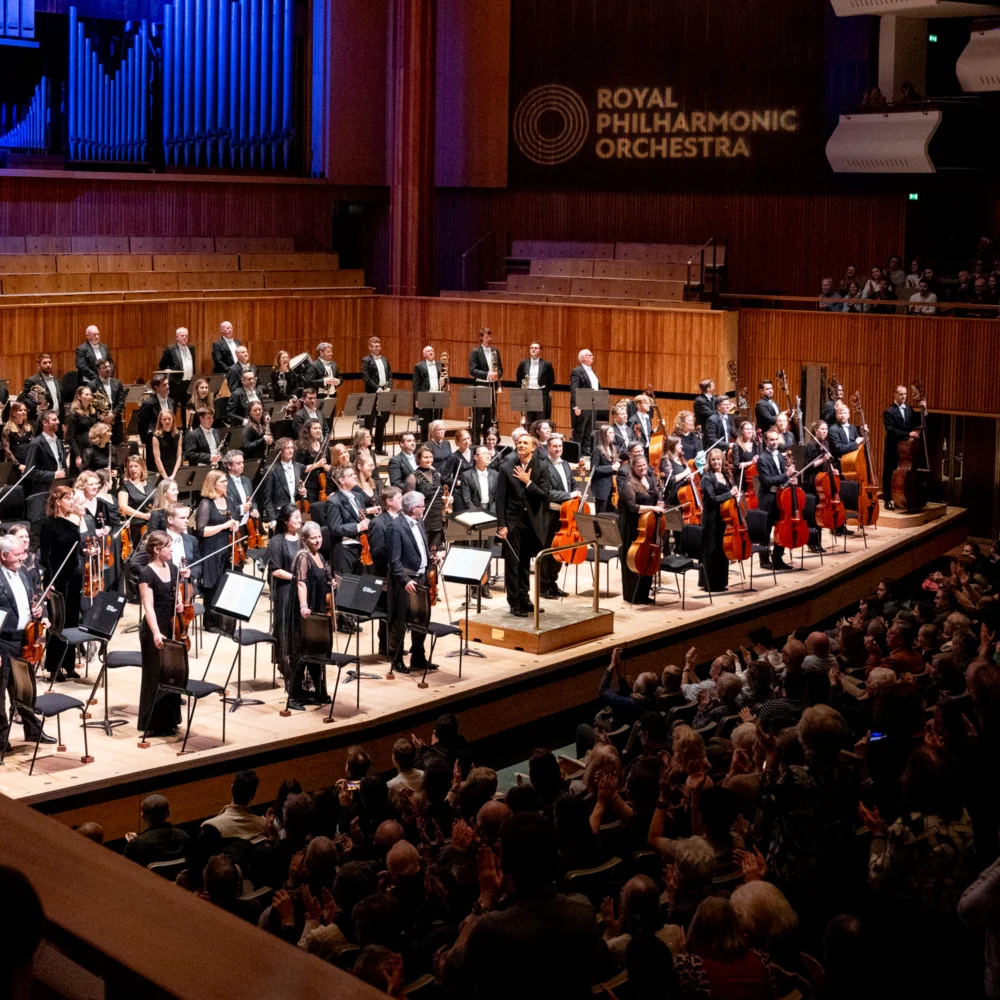
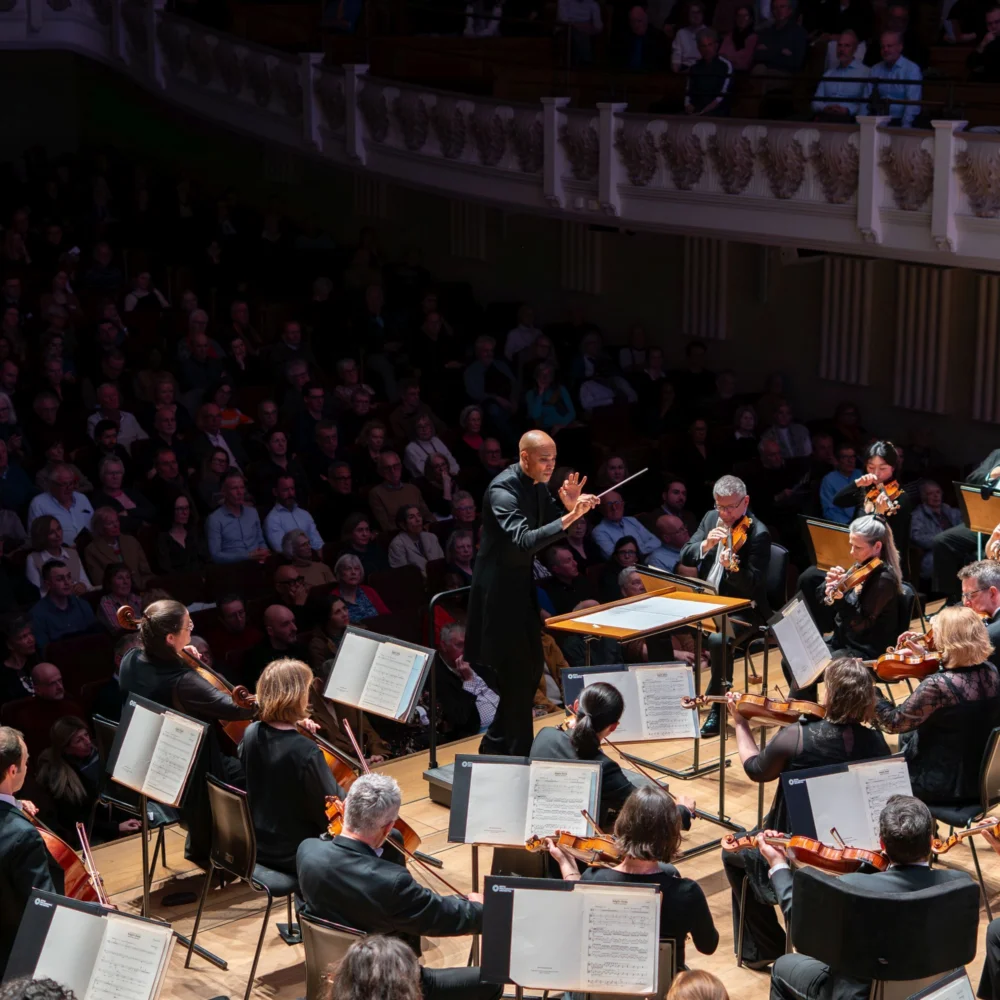
In creating a series of paintings for the Royal Philharmonic Orchestra’s 80th anniversary, Visual Artist-in-Residence Jeremy Houghton has sat down with various musicians from the Orchestra to sketch them and find out more about their lives and experiences in the art of making music. In this sketching session, Jeremy sat down with First Violin Andrew Klee, the Orchestra’s longest serving member, at the Royal Festival Hall to discuss his career, his instrument, and the creative challenges of playing in an orchestra.
Below is an edited transcript of their conversation.
Jeremy Houghton:
Where did you grow up, Andrew?
Andrew Klee:
I'm from Leicestershire. I’m very lucky, because all my music education was free. I had a fantastic violin teacher. He was taught by Joseph Brodsky, who gave the first performance of the Tchaikovsky Violin Concerto.
JH:
So when’s your anniversary of joining the Orchestra?
AK:
Well, I found an old letter dated 2 Decembe 1976, which is when I began as an Associate Member in the Second Violins. And jumping through various hoops and things, I ended up in the First Violins. I feel I've been very lucky. I've had a great life.
JH:
So how old were you when you joined?
AK:
21. I was the youngest in the Orchestra in fact, I did a radio interview for the BBC as the youngest, and Georg Roth, a member of the Roth family, a very famous musical family, he was eldest, and he was eighty.
JH:
And has it been the same violin throughout that 50 years?
AK:
The one I play? No, I couldn’t afford that one when I started! I’ve been playing the one I currently have for about 30 years. It's an old Italian instrument – it’s a beautiful instrument.
JH:
So when you say old...?
AK:
1700.
JH:
Wow. That's incredible. So, Paul McCartney said recently in an interview that he learns stuff from every instrument he plays. All his different guitars teach him new things. So this violin of yours, has it changed the way you play much?
AK:
No quite – finding the sound is the most important thing about playing an instrument. You grow with each other. You mould into one.


JH:
I was talking to Zoë and Ruby earlier, and we were comparing my principles of painting and drawing to their principles of making music. And so, with colour, for example, on a painting, warm colours tend to come through, cold colours tend to recede, so you create depth in that respect. With the violin, would you describe that similarly?
AK:
It’s the same as you. It's the same journey. We’re looking for colours that are appropriate to the music that you’re playing. And you have to treat the violin as a human voice, and this is going back to my teacher’s ideas, he was always saying that you have to emulate singers and the human voice. The expression that we put into our speaking and singing, we have to try to apply that to playing the violin, and sometimes I still struggle to do that.
JH:
How much free rein would Vasily give you? He's got to keep you all on track. How much can you slightly deviate?
AK:
Obviously, you can't be too free with what you want. I think with most musicians, so much of what we do is at home in our practice. And very often, you’re preparing, because in a symphony orchestra there’s such a loud level of sound, so that you can’t always hear what you’re playing. So you go home and then you have to listen to your own sound. There’s a constant journey.


JH:
Would you say the same principles apply to the texture? I'm painting sometimes with thick paints and, you know, layering it on, is that is that another aspect of what you’re trying to think about?
AK:
Absolutely. And certainly in the Parsifal that we just played, there’s so many colours within that score. Vasily is the man in charge of painting that picture, how he feels that it should be done. We rely enormously on the conductor to take us on their journey.
JH:
What's the narrative of this and where does the violin fit in with that narrative?
AK:
It’s part of Wagner’s enormous score. And it's a very long journey in the opera house, and we’re only doing 45 minutes today. The arrangement is by Erich Leinsdorf. Erich Leinsdorf was a great musician and conductor himself, in fact I worked with him many, many years ago. One of his concerts we had was halfway up a mountain in Sicily, and the weather was terrible. So, he took one look at it and he said, ‘I'm not doing this’, and he walked off. And our concertmaster conducted the whole concert. The rain and the wind were blowing, and the music was flying all over the place.
JH:
But that's interesting, because it seems that the halls and the spaces you play in also affects how you play, how the sound proceeds, how the audience receives it.
AK:
The great concert halls of the world all are easier to play in than a lot of other ones. You know, when the Musikverein in Vienna are such a good acoustic, it makes our lives much easier.
JH:
So in your 50 years, is that one up there?
AK:
Absolutely. I think that the Musikverein would be number one. It's beautiful, visually beautiful, and it just works. Every musician of note has played in that hall.
Read more
Explore the stories behind the music
